THANK YOU FOR SUBSCRIBING

Hrtech Outlook Weekly Brief
Be first to read the latest tech news, Industry Leader's Insights, and CIO interviews of medium and large enterprises exclusively from Hrtech Outlook
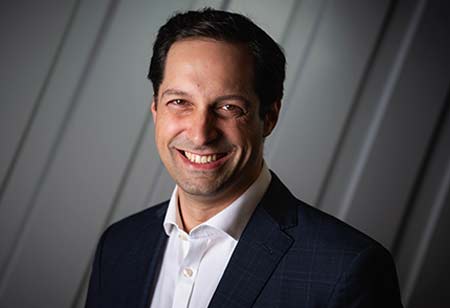
Doug Dureau is the CHRO at Hillwood and the Perot Companies, a multi-industry private company operating across real estate, oil and gas, investments and a family office. In his role, he works closely with business leaders to align people strategy with business strategy, strengthen leadership capability, support organizational design, reduce operational friction and preserve Hillwood’s values-led culture across its diverse businesses. Aligning People Strategy with Business Strategy Hillwood is a multi-industry private company with businesses across real estate, oil and gas, investments and a family office. Each business has its own rhythm, risk profile and talent requirements, so HR must understand each group’s needs while maintaining a unified culture. Hillwood is grounded in shared values as part of the Perot Companies, including ethics, long-term thinking, an entrepreneurial spirit and commitment to our teams, customers and communities. For HR, the role is not to function as a separate support team, but to stay integrated with how the business operates. That means helping leaders align people, processes, systems, incentives and organizational design with business priorities while reducing operational friction and preserving the cultural foundation that holds the organization together. Scaling Leadership without Losing Agility In any growing organization, the key question is whether the right people are in the right roles, particularly in leadership. It’s also essential to plan succession for various stages of the business lifecycle. When an organization is smaller, centralized decision-making can work well. As it grows, that model can create friction. With growth, structures, systems and processes must evolve to support scale without hampering the speed of decision-making. At Hillwood, we take pride in making decisions quickly, especially in complex work such as public-private partnerships, where we often align with city governments, cus
For years, employee benefits conversations have revolved around medical insurance. This makes sense, as healthcare is often the most expensive component of an employer’s benefits package. Naturally, most decision-support tools have also been designed to help employees navigate that complexity. But somewhere along the way, a significant gap emerged. While healthcare remains significant, dental, vision, life insurance, HSAs, voluntary benefits, and financial products are not peripheral add-ons. They play a critical role in long-term financial security and well-being. Yet, for most employees, they remain poorly understood, underutilized, or ignored entirely. That realization became the starting point for Help Me Choose Benefits. The solution is rooted in real-world experience from leaders who have spent decades in the industry managing employee benefits, running benefit call centers, and working directly with large employer groups to help employees understand and use their insurance products and services. They have seen firsthand where employees struggle, where tools fall short, and where confusion leads to poor decisions. “We felt like existing tools in the market were heavily focused on medical benefits and largely neglected most non-medical benefits that employers offered to their employees,” says Brandan Bruce, president. “We wanted to create something that doesn’t just recommend benefits but actually explains why those recommendations matter to each individual.” Built on that experience, Help Me Choose Benefits goes beyond traditional decision-support tools. It streamlines benefits decisions with personalized recommendations powered by industry data, employee insights into health, family, and finances, and input from brokers and HR teams. More importantly, it delivers those recommendations through a virtual benefits counseling experience that clearly explains the “why” behind every suggestion in simple, practical terms.


Organizations are under increasing pressure to balance workforce productivity, project delivery and employee well-being while operating with leaner teams and tighter resources. Kello Time built its platform around a challenge many nonprofits and small businesses continue to face: limited visibility into how employee time, project capacity and financial performance intersect across day-to-day operations. “What makes Kello different is that we approach timekeeping as a strategic operational tool rather than just a compliance function,” says Jamie Albaum, co-founder and president. The company designed its platform to move beyond traditional time tracking systems that simply record hours worked. Kello integrates timekeeping directly with project oversight, capacity management and financial reporting so organizations can better understand how labor allocation affects project execution and long-term sustainability. That structure also reflects the company’s emphasis on flexibility. Kello allows organizations to customize timekeeping frequency using hourly, daily, weekly or monthly tracking depending on how teams naturally operate. The company found this especially important for nonprofits and professional service organizations where rigid hourly reporting often creates resistance or administrative burden. Kello believes giving organizations clearer visibility into staff utilization helps leaders make more informed decisions around staffing, project planning and workload distribution before inefficiencies or burnout begin affecting performance.
Employers are under increasing pressure to support employee financial wellbeing without adding payroll disruption, administrative complexity or compliance exposure. Clair built its platform around a different approach to earned wage access by embedding On-Demand Pay directly into payroll and workforce systems instead of positioning it as a separate financial application. “Rather than offering earned wage access as a standalone consumer app, Clair embeds On-Demand Pay directly inside payroll and workforce platforms, making access to pay a native part of the employment experience,” says Nico, co-founder. The company believed reducing friction was essential for broader adoption. Employees can access earned wages within the workforce platforms they already use, while employers avoid introducing disconnected tools or altering payroll workflows. Clair designed its model to operate inside existing systems rather than alongside them. That embedded structure is also tied closely to the company’s infrastructure strategy. Clair uses verified employment and payroll data from workforce platforms including Intuit QuickBooks and Gusto to support underwriting, eligibility and repayment decisions. The company views workplace data as a stronger real-time indicator of financial behavior than traditional banking or credit signals alone. “Clair Atlas uses real-time employment data to make more responsible and more accurate credit decisions than legacy models built on backward-looking signals such as FICO,” says Alex, co-founder. Building Infrastructure around Payroll Systems Many organizations considering earned wage access products remain concerned about operational burden, repayment management and compliance risk. Employers often want to provide financial flexibility to employees without introducing exceptions handling or disrupting payroll administration. Clair structured its platform specifically to reduce those concerns. Repayment management occurs through the company’s infrastructure, eliminating the need for payroll adjustments when employees use On-Demand Pay. Employers can also offer the service without direct implementation costs.

Lauren Roberts, VP HR, Global HR Operations, The Goodyear Tire & Rubber Company
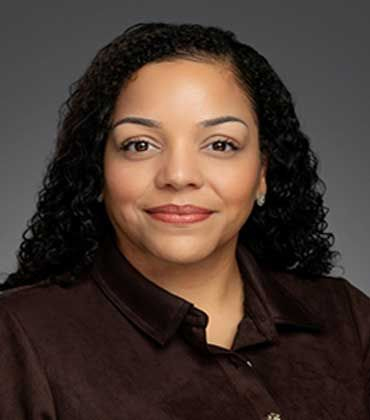
Candace Villafanez-Dukes, Corporate Human Resources/Payroll & Benefits Manager, Long John Silver’s, LLC

Christina Parr, Head of Talent Acquisition, Learning and Organizational Development, Argo Group US
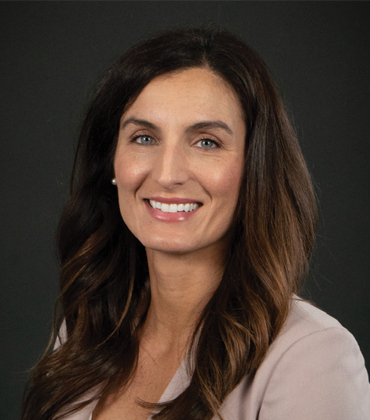
Christine Wolf, Director of Learning and Development, Cardinal Group Companies [NASDAQ: CDNL]

Kyle Erffmeyer, People Analytics & HR Technology, Williams-Sonoma, Inc.
AI-driven decision support solutions deliver higher accuracy, greater operational effectiveness, and increased competitive advantage.
Employee-embedded earned wage access platforms strengthen payroll flexibility, improve financial wellbeing, enhance operational efficiency, support secure wage access, and benefit employers and employees.
Reimagining HR for the Intelligent Enterprise
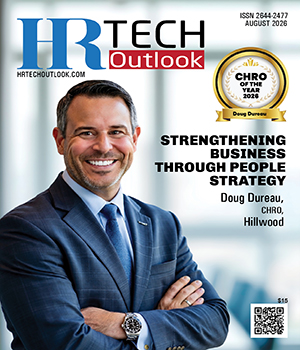
Our cover story recognizes Doug Dureau, CHRO, Hillwood, as CHRO of the Year 2026. Dureau demonstrates how HR creates measurable business value by aligning people strategy with organizational priorities, developing leadership capability and preserving a values-driven culture across a diverse portfolio of businesses.
This issue also honors Help Me Choose Benefits as AI-Driven Decision Support Tools of the Year 2026. By combining AI-powered recommendations with personalized education, the platform helps employees better understand the full spectrum of employer-sponsored benefits and make informed choices with greater confidence. We also feature Clair, recognized as Top Employee Embedded Earned Wage Access Platform 2026, for embedding earned wage access directly into payroll ecosystems to improve employee financial wellbeing and Kello Time, recognized as Top Time and Project Management Software 2026, for connecting workforce visibility, project planning and resource management through an integrated operational platform.
Our CXO contributors reinforce the importance of thoughtful technology adoption. Christine Kappelhoff, Director, HR Technology at Xcel Energy, emphasizes that successful transformation begins with human-centered design, meaningful change management and a deep understanding of the employee lifecycle. Aaron Ziff, Senior Director, HRIS at Signet Jewelers, highlights the value of user-focused system design, automation, strong governance and reliable data as the foundation for informed business decisions.
Together, these stories demonstrate that the future of HR lies in aligning technology with people, strategy and business outcomes. We invite you to explore this issue and discover the leaders and innovations shaping the next generation of human resources.